Showing posts with label characters. Show all posts

Nobody's Perfect

Believe it or not, writing fan fiction really did teach me a lot of things. And it only took me a few months in the fan fiction community to learn the ultimate, number one rule of writing (fan fiction or otherwise):

The Mary-Sue is fatal. Avoid her at all costs.


My friends and I made a BIG deal out of this on FF.net-- maybe a bigger deal than we needed to. But then again, my fandom (Lord of the Rings) was renowned for churning out endless piles of 197 chapter fics, chronicling the tales of gorgeous teenaged elleths, bestowed with never-before seen powers (never-before seen in Middle Earth, anyway), who swooped into the Fellowship of the Ring and saved Frodo multiple times before finally destroying the ring themselves and riding off into the sunset with Legolas or Aragorn (or sometimes both).

It was stories like these that gave fan fiction a bad reputation, and we were determined to redeem ourselves. So no more Mary Sues. In fact, in my time on FF.net, I really only saw maybe five or six Mary Sues. Not so when I turned my eyes outside of fan fiction, and looked around at all the so-called "original" books and movies that were coming out.
Last night I watched Star Wars: The Force Awakens for the first time. And I should stop right about now and say there are going to be spoilers in this post because I'm assuming everyone's seen it by now. If you haven't, stop reading right here.

So you've seen it? You sure? Okay, keep reading.

I don't tend to like the girl characters in movies. They're usually wildly unrealistic, arrogant, and really only there for all the guys, both those in the movie and in the audience, to stare at. Girl characters usually just annoy me to death, because so few movies portray them correctly. And so something that really got me excited near the beginning of Star Wars episode 7 was Rey.

She was kind. She was feminine. She was good with machines and robots and space junk. She wasn't really that pretty and she definitely wasn't objectified. She was a perfectly normal and awesome human being (or alien, more likely), and it didn't take long before I was cheering wildly for her, screaming "You GO, girl!"

I liked how she was good with parts and machinery. It made up an interesting part of her personality and actually contributed to the storyline, so I was totally on board with it, in spite of the subtle hint at trying to be that strong female character. I didn't totally buy it when she beat up two guys at the same time in less than two minutes, but I supposed that it was probably good they didn't make Finn have to save her. I was extremely doubtful when she turned out to be a great pilot and a little bit upset when I found out that she had some kind of connection to Luke's lightsabre. But I still clung to the hope that eventually she'd get some flaws that would help even it all out.

And then turns out she's strong in the force-- stronger than Kylo Ren, who I'm assuming has been training since childhood (right? right?), and just-- nope. I was done.
And I'm probably more upset with Star Wars episode 7 than I would have been if Rey had just been the stereotypical strong female character that I honestly hate a lot, because instead, they created a really likeable, compelling character that I desperately wanted to be on board with. And then they ruined her, because,

a) she had no flaws, and
b) she could do anything

Nobody's perfect. I don't care if you need a mechanic AND a pilot AND a talented jedi. I don't care if you think that it will make the feminists happy to see a Mary Sue on screen. I don't care if you're trying to represent women in a positive light.

Representing women as perfect is every bit as annoying as representing them as weak. Want another shocker? We're human beings, people. We're aren't objects only there for the sake of men, but we aren't goddesses, either. We have character and personality and interests and hobbies and likes and dislikes and strengths and flaws and skills and things we're just downright bad at. Just like everyone else.

Of course, it's not just women who get painted perfect on screen. The Gary Stu counterpart isn't quite as common, but he still makes an appearance. He's still annoying. Surprise, surprise-- guys can't do everything, either! Guys mess up sometimes, too! Everybody does.

Just because you're not writing fan fiction doesn't mean you can get away with Mary Sues and Gary Stus. Thankfully, it's not that hard to avoid writing these types of characters. There's just one simple rule you have to keep in mind.

Nobody's perfect.

Nobody. Ever. So your characters shouldn't be, either. It's that simple.
(And, for the record, I did love the new Star Wars movie-- and I'm still clinging to the hope that Rey will shape up-- or down, in this case-- in the upcoming films. So don't kill me, please.)

So, what did you think of the newest Star Wars instalment? What are some Mary Sues or Gary Stus in pop culture that annoy you personally? Do you think it's ever okay to write "perfect" characters?
MBTI Blog Challenge: How to Write an ENFP

The fabulous Hannah Heath tagged me for the "MBTI Blog Challenge" and I am soooo excited to about this! Basically, the idea is to write a post designed to help other writers write characters accurately-- specifically, characters that fall into the same Meyers Briggs type as you!

In case you didn't notice all the flailing and ranting that goes down over here about this, I'm an ENFP. And I love my type. Obviously, all the types are awesome, but can I help it if the ENFP holds a special place in my heart? Like every other type, ENFPs have their good points and bad points, and while, on the surface, it may seem like they're sweet and fun and there's really not much else to be said for them, and ENFP might be exactly the type your story needs.

Or, you know, he might just be fun to play around with.

(Warning: this is a long post. Feel free to skim-- I've put the most important information in bold.)
But before I go any farther, I want to shout out a huge Thank you! to my fellow ENFPs, Krissy and Katie, for their invaluable help and thoughts on the ENFP personality type. They are also lovely human beings and astounding bloggers, so you should check out their blogs.

The ENFP

So maybe you're wondering, "What is an ENFP anyway? I know nothing of this type." In which case, my poor unfortunate friend, allow me to add a ray of hope and sunshine to your dismal life.

ENFPs, sometimes known as the "Champions" or the "Inspirers", are often stereotyped as being the "life of the party", having great social skills, and an infectious enthusiasm for life, the universe, and everything. And the stereotypes are there for a reason. ENFPs love new people, experiences, and ideas, and we love to get excited about the things we love. You know that one person who laughs constantly, is a notorious hugger, and might be a shape-shifting unicorn? You might just have yourself an ENFP.

We go way deeper than the stereotype though, and some ENFPs can get seriously annoyed if you act like their social butterfly side is their only (or even dominant) side, so do not try writing an ENFP character based on just the stereotypes. Just don't. We might be unicorns, but unicorns have horns and we can kill you with them.

I don't want to hurt you, though, so instead, let's talk about how to write an authentic ENFP.

ENFP: Core Traits
  • ENFPs are often known as "the introverted extrovert". (This is because of the ordering of the functions, which would take too long to explain, but you can look it up if you want.) They require much more "alone time" than the typical extrovert, and are sometimes mistaken (and can even mistake themselves) for an introvert. However, they are extroverts, as they are energized and motivated by the external world of people and experiences.
  • ENFPs are very curious. This is where the stereotype of the easily distracted, "Oooh-- shiny!" ENFP originates. They can come across as random and unfocused, but in reality, ENFPs are simply fascinated by every aspect of life and want to explore every opportunity that presents itself.
  • ENFPs are often indecisive. This springs from their natural curiosity and fascination with everything (and I mean everything). They want to experience every possibility, and so when it comes to making decisions on which possibility they will experience, they are often caught in a dilemma. This is further aided by their Feeling function, as they want to make a decision that will make everyone happy, and this is often impossible.
  • ENFPs value one-on-one, close relationships. As extroverts, they are stimulated by people and enjoy a wide variety of relationships, but unlike many other extroverted types, it is the emotional connections they make with others that they value most, not the sheer excitement and exhilaration of being with people. Because of this, close, personal relationships are more important to them than their wide circles of acquaintances.
  • ENFPs are fiercely independent. "I do what I want!" is how they run their lives, and they feel stifled by norms and conventions. They desperately desire freedom to be creative and original. They are neither "leaders" nor "followers", but prefer to do their own thing and let others do their own thing. Control in all it's forms bothers them.
ENFPs: What makes them happy
  • Encouragement and affirmation from others. It can be as simple as a hug or a pep-text, but ENFPs truly appreciate it when you go out of your way to show them they're loved. (Which often leads to ENFPs being very encouraging towards others, as well.)
  • New ideas and experiences. ENFPs love life and all the opportunities, both mental and physical, it presents. Their innate curiosity leads them to seek out new possibilities wherever they go, and they enjoy processing and analysing information, particularly in tangible ways, such as intelligent conversation and hands-on experimentation.
  • Others' happiness. Healthy ENFPs are extremely empathetic and care a lot about their fellow humans. Others' joy gives them joy, and they'll be some of the first to celebrate with you for any reason in the world.
  • Freedom and spontaneity. ENFPs value originality and creativity in every aspect of their lives, and they often feel that strict schedules and regulations interfere with these values. They enjoy the thrill of taking life as it comes and making it into a life they're proud of living.

ENFPs: What upsets them
  • Judgement. ENFPs hate being judged, and they hate to see others judged almost as much. They tend to be very tolerant people themselves (they are very set in their opinions, and are convinced they're correct, but they also realize that it's okay for people to feel differently on things) and so it especially irritates them when others don't return the compliment. (And, believe me, ENFPs can tell when they're being judged.)
  • Manipulation. ENFPs believe in doing their own thing, and are extremely annoyed when others try to force them to conform to others' plans and ideas using unfair means. (Though it should be stated that unhealthy ENFPs are often quite skilled at manipulating others.)
  • Conflict. ENFPs hate drama as a general rule, and will do a lot to avoid it, often to a fault. (However, remember that if someone goes to far and makes them mad enough, they can transform in a matter of seconds and become the scariest unicorns you've ever met.)
ENFP: Strengths
  • Very empathetic. ENFPs care deeply about other people, from their closest friends to a stranger on TV. ENFPs are emotional people, and even when they don't know what someone is going through, they can find a way of relating and empathising, through the emotions they share.
  • Good people skills (usually). Most ENFPs are very comfortable in social situations, are excellent communicators, and are really good at making friends. (But I missed out on this area somehow, so-- I don't know?)
  • Open to new ideas and experiences. Yes, totally a good thing. ENFPs are adventurous and ready for anything, as well as generally open minded. They like to explore and experiment, and this makes them quite fun to be around.
  • Dream big. ENFPs are naturally focused on the world of future possibilities-- and there's no possibility too large for the imagination! They have high aspirations, and they're stubborn enough that you'll never talk them out of them.
ENFP: Weaknesses
  • Overly emotional. Anger, sorrow, happiness, depression-- ENFPs don't do anything by halves. They yell too much, cry too easily, and laugh too loud, and other people usually don't appreciate it.
  • Get stressed easily. I'm not sure where this comes from-- maybe it's because they don't do anything by halves?-- but I know it's true in my life, and the research I've done is saying the same thing, so... any ideas why this is?
  • Easily distracted. ENFPs want to experience everything, and there's never enough time to do it all in. They flit from idea to idea trying desperately to explore every possibility there is before it's too late, and often enough, they don't have time to finish with one possibility before another crops up and captures their attention.
  • A bit too independent for their own good. Rules and authority are important aspects of life, but that's difficult for the ENFP to accept. Often times they are so set on their own way that they forget the rules are there for a reason and that breaking them rarely brings about anything good. This problem does usually diminish as the ENFP gains maturity, however. (And yes, a teenaged ENFP could quite conceivably fit into the "rebellious teenager" stereotype, but not necessarily.)

ENFP: Other random facts
  • Many ENFPs are easily bored.
  • ENFPs tend to be very popular, because of their friendly, spontaneous, and accepting nature.
  • ENFPs can shut up. Please stop this stereotype. I've known a lot of ENFPs, and while many of them (including myself) were the stereotypical obnoxious chatterbox when they were little, they all had pretty much grown out of it by high school. I'm sure there are older ENFPs who still talk way too much, but they are exceptions, not the rule.
  • ENFPs are supposed to get along best with INFJs and INTJs. (And my best friend is an INFJ, so-- I dunno, there might be something to it.)
  • That being said, some ENFPs do not get along with strongly expressed T types. This can be because they misunderstand a Thinker as being heartless, condescending, or just plain mean-- all of which traits are repulsive to the (healthy) ENFP. (Btw, personal note-- and, Thinker peeps, I love you and y'all are awesome people-- to be totally honest, I don't think I've ever met a T who didn't scare me to some extent.)
  • Other people often think ENFPs are flirting, when they're really just being "nice".
  • They procrastinate. A lot.
ENFP: Fictional characters
YES, these exist, and many of them are quite popular. It's possible to write a great ENFP, and here's a few examples you might want to check out of some very different characters who I think fit the type quite well.
  • The Tenth Doctor (Doctor Who?)
  • "Scout" Finch (To Kill a Mockingbird, by Harper Lee)
  • Anakin Skywalker/Darth Vader (Star Wars)
  • Peregrin Took (The Lord of the Rings, by J. R. R. Tolkien)
  • Anna (Frozen)
  • Peeta Mellark (The Hunger Games, by Suzanne Collins)
(Oh, and yes, you have my permission to argue with me about these typings in the comments, if you want to. :P)

Some other fun resources, if you want to write an ENFP:

And that's the ENFP. If you have questions, don't be shy-- ask away!

Just remember: everybody is different, and nobody fits in a box. So don't write your ENFP by the stereotype-- but don't stick to these guidelines completely either. Sure, this is what the ENFP looks like to me, but I've only met maybe 10 (myself included) in my lifetime. I'm willing to bet there's a whole lot more out there, and that they're all unique and special. The above are some general rules, but you can break one or two here and there with your character-- go ahead! It's okay!

This is a tag, so I get to spread the Meyer's Briggs love to:
A. M. @ The Authorist
Lily @ Life of Lily

If I tagged you, don't feel obligated to participate if you don't want to, but I really would love to read about your personality types (especially since I have characters in all of them)! If I didn't tag you and you'd like to do it-- don't hold back!! Just make sure you shoot me the link so I can read your amazing post!

Here are the official rules:
  1. Link back to my blog and let me know when your post is up so I can fangirl over it.
  2. Title your post "MBTI Blog Challenge: How to Write an [insert your personality type]". This should help other writers find this resource quickly and easily.
  3. Give your MBTI personality type and provide a list of their core traits, likes, dislikes, strengths, weaknesses, and anything else you'd like to add.
  4. Tag other bloggers to do the same.
  5. Share your post with other writers to help them craft their characters.
What's your Meyers-Brigg's type? What types would you most like to learn how to write? Do you have any ENFP characters? And, most importantly, are you going to do the Blog Challenge?
In Which I Compare Characters to Screaming Children

Sorry for the late post, but my internet has been sketchy for the last three days. It was sketchy today too. I really hate our internet.

(There is no graphic for this post because reasons, mainly involving the fact that screaming kids are very unattractive to look at.)

So recently I went on vacation. It was a family vacation, and I have an enormous family which includes four nephews and a niece all under the age of seven. I love my nephews, but, boy, can they be crazy (and loud) sometimes.

That Wednesday, the entire family assorted itself out among four different vehicles and headed down to a small island near where we're staying, where we like to bike around and eat ice cream and buy candy (and other stuff, but those are the important things), and, by some unfortunate chance, I found myself riding with my brother, his wife, their two sons (aged 2.5 and 1), and my other nephew (aged 6), who for one reason or another wasn't riding with his parents.
I like to think this will be me and my nephews in ten years.
Now, when we usually take a trip to this island, it's about a half hour ferry ride, and ferries run every half hour. But somewhere in the mechanical circuit of things something must have gone awry, because we spent an hour sitting in line for the ferry, and when at last we were boarded, it took another hour to reach the destination.

In all, I was in the car with three bored boys for 6 hours, round trip. And they screamed.

So, now you know the inspiration for this post, let's get down to business. Why characters are basically screaming children.

They will do anything for your attention.

My youngest nephew, Nicholas, has a bad habit of screaming whenever nobody is looking at him. I was in the seat directly behind him, and the moment I sat up and looked over the back of the seat at him, he would stop and starting grinning angelically, but if I were to relax and disappear from view (or even turn my head)-- more screaming.

Characters are similar. They're constantly there in my head, nagging me to look at them, and if I don't, they make sure I feel guilty for my cruelty-- or for my "bad writing routine". But once they catch my attention and I start playing with them, they suddenly start acting like angels and I wonder how I could ever have been annoyed at them.

They won't do what you tell them to.

"Nicholas, don't play with that." "Shane, stop screaming." "Liam, buckle up right now." Haha, good luck. Even when I was able to wrest away dangerous toys, placate angry sobs, and shove rambunctious boys into their car seats, it was never long before the chaos broke out afresh in some new direction. Little boys do not listen.

And neither do characters. "Do this." "Go there." "Say that clever thing." It all falls on heedless ears. They have their own opinion of what the story should be like, and even if I do force them into doing and saying the things I want them to do and say, it only makes other problems sprout up. 

They leave you exhausted...

You wouldn't believe the emotional and mental strain that results from being trapped in a car with a ton of kids unless you've been there. There's the noise for one thing, and the constant requests. "Auntie, read this book to me." "I want my bear!" "AAAAAHHHH!!!" Then there's the fact that you have to keep a constant eye on them, to make sure they don't drink hand sanitizer or unbuckle and climb into the trunk. Before long, I just wanted to collapse in a heap and die.
Characters like to crawl into my head, scream at me, and drive me insane with their problems. The mental effort of coming up with the all the different character arcs and growth leaves me so tired, and all that time spent crying in the shower over the upcoming (or recently fulfilled) deaths doesn't exactly help.

...But they won't let you sleep.

By the returning ferry ride, I was done. Completely done. I lay down in the back seat of the van and tried my very best to take a nap. But by that time, the boys were all full of sugar and tired in the not-good way. They were making noise, climbing all over me into the trunk, throwing foam stars at me (don't ask me where those came from), and trying to talk to me every couple seconds. Sleep was not an option.

All my characters are night owls. The moment I lie down and try to go to bed, they all attack me with renewed vigour, begging me to write their stories. And then my Mom asks me why I can't sleep at night.

But, in spite of it all, you can't help but love them.

My nephews can be exhausting and crazy, but I still adore them, no matter how naughty or annoying they may be. I mean, they're my nephews! And they really are the cutest little kids.

No matter how much I hate your novel or writing in general, the one thing I can never bring myself to hate are my lovely characters. They drive me insane, but how can I not forgive them, when they're so adorable?

What would you compare characters to? Do you have experience with children? What's the most annoying thing about your characters?
Defining Strong: Why the "Strong Female Character" Trend is Actually Anti-Feminist

We're all familiar with the "Strong Female Character" issue. Aimee blogged about it here and CC blogged about it HERE and both posts are absolutely awesome and you should go check them out. NOW. Come back when you're done.
All done? Yay! Welcome back!

So, you're familiar with the stereotypical Strong Female Character. She's that hot fighter-girl in the skin tight suit, knocking out all the guys and doing a cool hair flip in her spare time. "Woooh!" we all shout. "You go, girl!"

But there's a problem with this. (There's actually a lot, but we're just going to talk about one, because Aimee and CC already covered all the others.) The problem lies in what we're using to define the word "Strong".
The origin of the "Strong Female Character" was really a protest. Not so many years ago, the typical female character was a flat "damsel in distress", there for the dashing hero to save. She was prone to swooning and bursting into tears, she was stunningly beautiful, and she honestly couldn't do anything for herself. And women found this insulting because, seriously, what girl is this helpless? It was a really stupid stereotype.

So something had to change. And the novel writers and the movie makers thought they'd found a solution to make everyone happy. They'd write "Strong" female characters. The question now was what really made a strong female character strong? And the writers and makers formed an answer based on years of the very root prejudice that the people who objected to the old stereotypes were actually objecting to-- namely, the idea that men are better than women.

How do we make a woman strong? We make her masculine! We give her traditionally masculine strengths like fighting, fixing cars, drinking a lot (don't ask me where they got that one), etc. We'll present a character who is physically, mentally, and emotionally strong in all the same ways men are. We'll make her masculine, and that will make her strong.

This is chauvanism. Men and women are equal. That means women, real women, the way they are, are (generally speaking) strong. That means men, real men, the way they are, are (generally speaking) also strong.
And men and women are different. I know some people disagree, but they are, not only anatomically, but emotionally, psychologically, physically different. Have you ever seen a man and a woman arguing? They are different. And that's a good thing. It honestly doesn't matter because they're still strong the way they are.

Creating masculine female characters and calling them strong because of their masculinity is degrading. It's saying that "strong" equals "male".

Now, don't get me wrong, it's okay sometimes for female characters to have abilities like fighting, fixing cars, and lifting weights. Real women do these things, especially in recent years, and do them well. But the reason these abilities were given to "Strong Female Characters" is because they are traditionally identified with men, and that's a problem. Not to mention a couple of fancy talents don't necessarily make you strong.

Think of all the women who can't do certain things that men can do. I can't fix a car. I don't know the first thing about cars. Does that mean I'm not strong? No. I can shoot a gun (I can't hit anything outside a range of two feet, if that much, but let's not mention that). Does that mean I am strong? No. Think of all the women who can't act or think or talk the way men do. They're still strong-- they're just women.

We shouldn't use men (or women either) as a standard of strength. If your character is a girl, she can be strong and be a girl. Taking care of little siblings, throwing girly parties, or running a sewing business are all admirable talents that some girls have and most guys don't. Who's to say that a mechanic is stronger than a seamstress? That a businessman or woman is stronger than a babysitter?

When we call a female character strong simply because she's better than a guy at something or other, particularly in a traditionally masculine areas, we're buying into the false idea that guys are usually better than girls. Write your women to be strong women-- not female men.

What's your take on the "Strong Female Character" trend? Do you think there are some business and societal roles that are "stronger" than others (mechanic vs. babysitter)? Comment away, but do try to keep it polite, as I know this is a controversial issue.

3 Secret Ingredients to Creating Characters You Love

Lately, I've been rewriting the novel I drafted for NaNo back in November. Diving into the edits back in April, I was painfully aware of the many problems that needed fixing. One of these was my main character. I simply didn't like her.
As part of the writing community, we hear a lot about "strong leads" and "proactive characters". But all the strength and pro-activity in the world won't make our characters worthwhile if we, as the authors, don't love them. What makes a character great is the passion and care that the author puts into him. If we don't love our characters, the readers can tell-- trust me. And it usually results in either a "why do I care?" feeling, or an anger at the author for playing favourites with his characters.

So it's important to love our characters. But what if we just don't? (This may sound stupid to some of you-- why would I be writing this story in the first place if I don't love my characters?-- but some of us really do struggle with. If you don't, kudos to you. You probably don't need to bother reading this post.) What can we do to make ourselves fall in love with our characters, when in reality they're not all that lovable? We fix the character, of course!

Haha. Easier said than done. So I'm here to help with 3 secret ingredients you can add to spice up your character. These have been tested-- they worked for me, turning a lump of boring, annoying personality traits into one of my best friends. That being said, if you try them all and still hate your character, I will humbly accept your blame. (But if that's the case, maybe you just need to drop-kick that charrie out of your story.)

1. A piece of yourself.

You've probably heard this one before, and your character may already have it. But if he doesn't, you need to pour some in right now.

Think about your friends. Why was it you developed relationships with these people? Chances are it was because you had something in common: a hobby, a fandom, or, if nothing else, possibly age. If you didn't have anything in common, you wouldn't have anything to talk about-- unless you were both the sort of people who love to argue, in which case, you had that in common!
It's important that you have something in common with your characters, something you can understand and identify with.

2. A piece of someone you love.

Think about your favourite character, your best friend, or your closest family member. What do you admire about each of them?

When I was trying to make Avis, my MC, more likable, I sat down and thought of all my favourite female characters in books, movies, and tv shows, the people I admired most: people like Martha Jones from Doctor Who, Ella from Cinderella, and Idril Celebrindal from the Silmarillion. Before long, I realized that they all had three things in common: they were smart, strong, and selfless.

Pick a few of the qualities that the people you admire share, and make them defining traits in your characters' personalities. It could be a sarcastic sense of humour, an eternally positive attitude, or an ability to take charge in any given situation. Whatever it is, take it and run with it.

Note: You probably admire a lot of people, and they may be very, very different. It helps if you take a small number of people who are most like your character and look for their defining traits. For instance, I love Maria Hill, but she in no way resembled Avis, so I didn't bother trying to give Avis the traits I admired in Hill.

3. A piece of something you value.

I'm an extroverted feeler, and I highly value people and relationships. Stories where the protagonist has to learn to "believe in himself" in order to accomplish his goal don't ring true to me. I can believe in myself all I want and still fail. What do ring true to me are stories where one person isn't enough in himself-- where it takes other people to get him through to the end. That's why Avis is team oriented: she needs people, and she's knows it's important to help people as well.

What's something you value? It might be anything: peace, honesty, nature. Don't be afraid to make that a part of your character.

When your character is made up of things you care about-- yourself, your friends, your beliefs-- it's hard to feel disinterested or apathetic. You have to care. You have to relate. You have to love.

But before I fade out, I just need to say one more thing. Don't let what's "popular" and "safe" dictate your characters. Because if you just make your character into the type of person you think your reader will like, but don't particularly care for yourself, it shows. Write characters that you love, even if you think that they'll get lost among the Katniss Everdeens and Tony Starks. It's more important that you love them, even then that your readers do.

What are some things that get you fangirling over your characters? Have you ever tried taking characteristics from your favourite characters and giving them to your own? Do you think that's plagiarism (because if it is, I'd better get running from the law...)? What are some things you value which are woven into your characters? I want to know EVERYTHING (and yes, that was just the slightest bit creepy, sorry).
Doing Defines You: Using Relationships to Reveal Your Characters

Recently, I watched Fellowship of the Rings for what was probably the 80 millionth time. Of all the Middle Earth movies, the Fellowship is my favourite, and very close to my heart. I'm the first to admit that objectively Return of the King was the best, and Two Towers had the most Smeagol, so, ya know, that means it's pretty awesome. But I still like Fellowship best, and watching it again, I realized why.

It's all about relationships.

With the Fellowship, we get nine characters stuck travelling with each other. Some of them are on friendly terms, others... not so friendly. We've got a huge variety of personality types and cultural backgrounds, which results in an even huger variety of relationships. And the whole movie long we get to watch these relationships in play, more so than in the other movies.

(It's also got Boromir, so I mean... how can it NOT be everyone's favourite?)

I think often as writers, we forget the power of relationships. Oh yeah, we give our character a girl/boyfriend, a friend or two, and sometimes a family, but we forget that ultimately, it's how we interact with other people which really defines who we are.

You can tell basically anything about a person from the way they act around other people, if you pay attention. We can guess Boromir is the eldest child in his family long before we meet Faramir by the way he supports and protects the other companions... much like an older brother would. We knew that Elves and Dwarves aren't on friendly terms before Hobbit came out and explained their rivalry, because we saw the way Legolas and Gimli treated each other.

It doesn't just stop with the externals, either. We can make some pretty good guesses as to their personalities and the way they see the world, too. We can tell that Aragorn believes men are weak by the way he treats Boromir and even himself. Are you familiar with the Meyers-Briggs Personality Types? We can deduce that Boromir is an F(eeler) and Aragorn is a T(hinker), simply by watching the way they interact with each other and the other members of the Fellowship.
Give them a moment, for pity's sake! 
(And yes, I'm talking way too much about Boromir in this post. But seriously!!! This guy!!!)

As writers, we tend to pay more attention to what characters are inside. We emphasise their mental or emotional turmoil by climbing inside their heads and hearts and digging it out to show the reader. We investigate every inch of our characters' thoughts and feelings from our nice little inside view. And that's totally cool. Readers love the emotional attachment that comes from being inside a character's head and seeing the world through their eyes.

But ultimately it's not about what a certain character thinks or feels. It's about how he acts, how he treats those around him.
This gif sums it up well.
Think about it. In Age of Ultron, Ultron is trying to accomplish world peace in his time. That's a worthy goal, right? In fact, even though the movie was about the Avengers, the writers made Ultron a very believable and relatable character, whom the audience could sympathise with. His motivation was largely good, and he had a lot of believable emotional turmoil. Underneath, he might seem like a good person.

But his actions tell a different story. He tries to kill the Avengers, everywhere he goes, he leaves casualties, and then we find out that his plan for world peace is more like world destruction. Not such a good person after all.

It's important that you show what the character does and how he interacts with others, not just what he feels like inside. A person in a historical novel who believes all men are created equal and that the slave trade is wrong, but acts nasty and superior to all those he comes in contact with, still isn't a nice person. We learn most from the relationships. Show us how they treat other people, and we'll know what they're like.

Make the most of the relationships. They're not just there for feels and flails. They have a purpose. Use them to their full potential.

What do your characters' relationships tell about them? Am I just reading way to much into this relationship thing? Which is your favourite Middle Earth movie? Isn't Boromir just the greatest? What did you think of Age of Ultron?

Role: Making Characters Memorable

Hey y'all. I've got a special treat in store for you today. I begged my super talented friend, C. C. Gaylord, to do a ghost post for me, and being way too nice for her own good, she acquiesced. For better or for worse. Only definitely for better.

Over to you, C.C.
Original image courtesy of all-free-download.com.
My biggest frustration when reading a book with multiple main characters is trying to keep everyone straight. Granted, I have a terrible memory. Plus, I’m always rushing through the book to find out what happens. My common reaction to a character is, “Brent? Who’s Brent, again?” And I’m not likely to flip back several chapters to find out.


In movies, on the other hand, I usually have no problem remembering who’s who. This isn’t just because I can see what the characters look like, but because the characters usually slide into well-defined roles. Each character has a particular function within the team. You can do this just as easily in a book and get the same great results.

The Lord of the Rings, for example, has a main cast of nine characters. That’s a lot of people to keep straight and Tolkien didn’t do a lot to help the reader out with this in his book. The movie, however, did a great job, not just because each character had his own unique personality and quirks which made him unforgettable even long after the movie was over, but also because each character had a specific role.


Mentor/Guide

Gandalf’s role is that of protector, mentor, and guide (that useful character who gives everyone--particularly the audience--important information about what’s going on or how things work in the story world). Mentors often die so that the hero has to face the bad guys on his own and discover he has what it takes. What does Gandalf do? He dies so Aragorn has to take over.

Leader

Aragorn is at first a guide and becomes the default leader after Gandalf dies, besides becoming personally responsible for Frodo, the fellowship’s biggest liability. The leader is usually a strong, responsible character who thinks of his followers before thinking of himself.

One-Man Army

Legolas is a guide (there’s a lot of guides so far) and the-person-who’s-there-to-be-really-awesome-and-make-the-audience-say-wow. He also functions as a sidekick/friend for Aragorn--the person who gives him pep talks. Add to this his role as the one-man army. This is the “strong man” character who ends up saving the day quite a lot by basically taking out bad-guy armies on his own.

Clown

Gimli serves as comic relief and very little else (we’re going by the movies here), although he’s also the little-guy-who-overcomes-great-odds and he fills an important function by teaching Legolas (and learning himself) not to judge people by their race. Let me just say that it’s usually NOT a good idea to make a character comic relief and nothing else *cough* like the character below *cough*

Victim

Frodo is the attack magnet. (They’re useful to have around.) He’s also the “chosen one” who has to destroy the ring, so he becomes the most important member of the fellowship. He’s the person everyone else has to look after--in a lot of stories this role is taken by the baby brother/sister.
Sidekick
Sam fills the servant/sidekick role--he’s there to get Frodo to Mordor. But he becomes a hero in his own right later on in the story. Sidekicks often do. In fact, sidekicks are way too often the most popular character in the story. Ask anyone who’s his favourite character from The Lord of the Rings--it’ll probably be Sam.
Dynamic Duo
Merry and Pippin together make up a dynamic duo who usually do things in company. They spend most of the time getting themselves and other people into trouble, but they liven up the story quite a bit. Lots of stories will include a duo or even a trio. They’re usually immature. They’re often siblings. Sometimes they’re even twins.

Traitor

Boromir is the Judas figure. There’s usually one in every mix and you can often tell right at the outset who it is. He just looks dark, or brooding, or compromised. The traitor is generally in the story to add an element of menace--how else to explain how the whole audience knows who’s the bad egg while everyone in the movie has no clue? But the traitor isn’t always wholly evil--he’s often a tragic character who falls but then redeems himself, though at the cost of his life. A lot of villains fall into this category as well (Darth Vader, for example).


Believe me, there are LOTS more roles out there than just these eight, but you’ll find most characters fall into these common ones.


Think of your favourite movies--especially those with more than one main character--and list some of the roles the characters play in them. What about The Avengers? Ocean’s Eleven? Maze Runner?

So, what are some of the roles you thought of? What are some of the roles characters fill in your stories? Is anyone here and Avengers, Ocean's Eleven, or Maze Runner fan? Tell us in the comments!

Don't Tell Me Too Much: The Evils of Over-Description

Last year, I read a book.

It wasn't a horrible book, and I was pretty engaged for the first several chapters, though it seemed to be taking a rather long time to get to what I thought the book was supposed to be about. But it eventually did, and the protagonist finally left home to go and make his way in the world or whatever.

The book told about how the protagonist left the castle where he used to live and set off into the world. And then he looks back at the bottom of the hill, and the book goes into a long descriptive passage about what the castle looks like and everything about the castle, and if my memory serves me correctly, about the political system of the fantasy land the book took place in, and to be perfectly honest, I was bored.

This really is a very common problem in a lot of stories I've read (particularly fantasy) and also a lot of stories I write. And there is a proper place for world building, description, and character development.

So how do you know when you're telling too much?

I'm glad you asked.

Don't Tell Me When:


The information is unimportant to the story.

This may seem like a no-brainer, but I have read so many lengthy, flowery, descriptive passages about things that aren't even important to the story. And it's super boring. So if it doesn't help the story along, cut it. (This includes most setting descriptions and most physical character descriptions, but not all, so evaluate any information carefully before cutting or leaving it.)

The information interrupts the flow of the story.

Sometimes authors try to tell the reader something very important that they need to know, but they do it in the wrong place. They take time to tell us that the economy of the country is failing while we're all holding our breath to see whether the hero is going to win the sword fight. They describe the girl who is to become the hero's girlfriend in minute detail, when we just want to know if he's going to save her or not. Make sure you're not getting in the way of the story with the "important" information. Move it, or give it to us in tiny, subtle bites.

The information is taking too long to tell.

It should ring a warning bell when you've spent an entire page (or more) describing the protagonist's house, or telling about the political system in your story world. Because even if your protagonist's house is super cool, or the political system is incredibly fascinating, it may be you're obsessed with old houses, or that you're a politics geek, and I can pretty much guarantee you that some people, at least, are going to be bored when they try and read it.
So keep it short. Try to tell me in as few words possible. If it really does take a lot of time to explain, break it up, and feed it to me bite by bite, interspersed with lots of action and dialogue. Don't make me eat too much at one time.

The information doesn't flow naturally from the story.

Don't force what you want to say onto the page. If there isn't an easy, natural moment for you to mention the romantic interest's violet eyes, don't mention it. (In fact, if your romantic interest has violet eyes, don't mention it at all. I don't want to know. :P) Forced writing sounds, well, forced. Wait until it comes easily.

The information is only there to show off your knowledge.

You've spent two hours researching trains. Or maybe I'm underestimating it. You probably stayed up until three in the morning researching trains just for this one stupid scene. You now know basically everything the internet could tell you about trains. And so when you write that stupid scene where your protagonist is climbing around on the train roof, trying to find a way to stop the train, you might as well put all that research to good use and tell your readers just how much you know about trains. Right? Wrong. Don't do it. I know it's tempting. Just don't.

Do Tell Me When:


The information is crucially important.

Still don't info dump, but if there's something I need to know, I need to know it. Readers won't be happy if you don't tell them it's winter, and then make the protagonist knock out the villain with a snowball at the climactic moment. (Not that you'd do that, I hope.)

The information helps set the mood.

To continue with the snow idea, telling us that the protagonist's footsteps crunched in the soft snow might help us feel the suspense as he goes to turn off the computer that's set to destroy the world. Describing the protagonist's grandfather might give a sense of security and comfort. Wording is key here.

It's easy to disclose the information by accident.

If you find yourself mentioning a character's blonde hair without even thinking about it, chances are the readers won't get distracted by it either (unless it's late in the story and they already have drawn up the ultimate picture of the character in their minds as having brown hair). If it happens--unless it sound stupid (like "...running a gentle hand through his curly blonde hair...")--let it happen.

It's funny.

Seriously, you can ignore all the rules I've already laid out, so long as it's funny. I'm currently reading The Hitchhiker's Guide to the Galaxy by Douglas Adams, and he disobeys every single one of those "Don't Tell Me" rules. And you know what? I don't mind. Because it's hilarious! He can be as random, off the wall, and long winded as he likes, as long as he makes me laugh, and I'll keep reading.
I don't ship tenrose. This gif was just too accurate not to use.

That book I read last year wasn't a horrible book. I rather enjoyed it. I wasn't overly excited about it, but mainly for other reasons. Not because it lost track and told me too much occasionally.

So don't stress too much. When it comes down to it, each reader has a different interpretation of over description, and you can't please everyone. A passage here and there which tells too much won't necessarily kill the book for your reader. It will probably just annoy them slightly.

Still, you don't want to do that.

Unless you're Stephen Moffat.

What bores you as a reader? Do you like books that tell everything, nothing, or somewhere in between? (Where?) How do you try to keep your stories from crossing the line into boredom? Oh, and do you write humour? (I love humour.)

Everyone's a Hero

It happens to me all the time.


I’m reading a book or watching a movie or TV show, and a random somebody walks into the room. Maybe he stays there a minute, maybe he stays there 30. Maybe he has ten lines, maybe he has zero. Maybe he’s only in the background, standing around unobtrusively while the main characters are having a huge argument.


And suddenly I fall in love.


Someone who the author/director never gave a second thought just became my favourite character!!
Today I’m going to talk about how everyone’s a hero, and I’ll probably digress a lot and go on a whole bunch of rabbit trails and generally take a long time to get to the point, so be prepared, and bear with me.


To start out with though, let’s do what I love to do when it comes to writing. Let’s take a look at real life.


Your life is a story. It’s got a plot, a message, dialogue, setting, and characters. You’re the main character. And unless you’re super messed up and have huge insecurity issues, you’re the hero of the particular story that is your life.


Now think about everyone else’s life. This may be difficult and may make your head ache, but step out of your brain and into someone else’s. Everybody has a story that only he’s reading, and he’s the main character of that story. Usually the hero.
Their own future, definitely.
So we’re talking about writing. You’re a writer (I’m assuming), and you’ve written a story. You’ve got a plot, a message, dialogue, setting, and characters (oooh, those lovely characters). Now you’re probably spending a lot of time thinking and planning about those couple amazing main characters. You’ve got character maps, character questionnaires, and pictures of your characters on Pinterest (maybe you even drew them).


If you’re like me, you’ve also spent a lot of time squealing and thinking and crying over several of your favourite secondary and even tertiary characters. But let’s face it. They’re just supporting characters. They’re just there to make your main character’s story work.


Or are they?


So where am I going with this? A lot of places (‘cause I can never stay on just one topic I’m cool like dat). So let’s get to the point(s).

Your main character isn't everyone’s hero.
What's the difference between you and me?
We want our stories to be realistic (though a paranormal novel where everything is out of whack and everything goes against nature, human and otherwise, could be quite interesting and would go on my reading list). Well then, first rule of realism: it’s not about you. Let’s change that just a bit to work with our story and let’s say, “It’s not about him."

Ooooh...that’s hard. That amazingly funny and beautiful and amazing and brilliant character that you’ve come to love so much...it isn’t about him! No one in your world sees you as the main character of his story, and no one within the world of your book sees your main character that way either.

Everyone has his own story, and he’s the hero of it.
Even when you’re writing about someone else’s story.
So when you’re unbelievably awesome main character who ought to just be the sun of everyone’s universe walks into a room full of people, every single person in that room sees him as nothing more than a supporting character.
No, seriously. To some people in that room, he’s a primary character, someone who’s really important in their life story. To some, he’s a secondary character, a recurring person who hasn’t affected their lives in a huge way. To some, he’s a tertiary character, someone who they’ve only met a few times. And to some, he’s a ghost or background character. He’s simply there. They know nothing about him.

To each person in the room, they are only interested in your main character’s entrance inasmuch as it affects their life story (as seen from their limited point of view). They aren’t interested in the fact that he needs to talk his best friend on the other side of the room into lending him twenty dollars so he can go save the world. That girl over there is more concerned by the fact that he’s blocking the way out of the room as he stands in the doorway, looking around for his friend, and she’s too shy to say, “Excuse me.”

So what you’ve really got in your story, in every single character down to that gentleman in the hat you mention in passing and who never comes into play again during the entire book or even series...they’ve got their own stories. They’re their own heroes.
Because I love this quote. Don't even need a reason.
(If this point bothers you, ccgaylord@theauthorist wrote an amazing post about Mary Sues that you should totally check out. It's awesome.)


Know your characters' stories.

The school bully whom your MC runs into in the third chapter...what's going on at his home? What insecurities make him want to beat up those smaller than him? Does he feel the need to be accepted? Is he used to being mistreated, and simply wants to pass the pain along? Why does he do what he does?
-Tom Hiddleston
The girl waiting for you MC to move out of the doorway...why is she so scared to say just a simple "Excuse me?" Does she talk with a stutter, and doesn't want to make a fool of herself? Does she have a crush on your MC and simply can't get up the nerve to talk to him? Why?

Know their stories.

Somewhere, that person's a hero. It's your job to know where that somewhere is. And if you know, it adds depth and realism to the story.

Don’t underutilise anyone.

Not even Santa.
That character who you don’t like much? Someone’s going to like him. Maybe not most people, but someone.

Example!


Adam Mitchell (Doctor Who)

Sooooooo many people hate Adam, and the writers for Doctor Who made it pretty clear they didn’t care much for him either. The Doctor takes him along in the Tardis merely because Rose wants him too, and then kicks him out in the next episode, after he tries to transmit information from the future back to the 21st century.


People really hate Adam. There’s a good chance that 99% of the Whovians who will ever read this post hate Adam. But there is the remaining 1%.

Maaaaaaaster!!! *fangirls*
I loved Adam, and I will not apologize. My heart was broken when he got kicked out. He’s fairly well-meaning, slightly selfish and cowardly, inept, impulsive, curious, clueless, just a little ditzy, and a bit of a genius: in other words, he’s exactly like me, leaving out the genius bit. (And yes, now you know if I ever meet the Doctor, I will be kicked out after the first episode. Cruel Doctor.) He’s got his flaws, but he’s still likable, believable, and very easy to relate to. And need I mention Bruno Langley is way too good looking?

Point is, use every character to his full potential and don’t overlook anyone or think, “Everyone’s going to hate that guy.” Characters are one of the biggest things that hook readers, and if you’ve got a secondary character in there who you use to full potential and make it worth a reader’s while to like, whether or not you think anyone will end up liking him. Somebody almost certainly will.


Now obviously, every character can’t be completely likable, and you can’t make every character a primary character. That’s not what I’m saying. What I’m saying is, recognise the potential in every one of your characters and don’t show favouritism (not saying you can’t have favourites, just don’t show it). That character who only makes one appearance isn’t the hero of your story, but there’s another story out there he is the hero of. In that story, he’s interesting, brave, and smart, and the main character you love so much might be boring, villainous, or just a ghost character.


Don’t rob anyone of his potential. If people want to love him, give them something to back up their unexplainable love. Is it difficult? No.


It could be as simple as taking that character who walks in for five seconds and has just one line and making him stutter. It could be making that taxi driver have the radio on at full blast and be belting along while gyrating and keeping time by pounding on the steering wheel. It could be taking that girl who’s waiting for your hero to move out of the doorway and showing her taking a step forward, then a step back, showing her chewing her lip and trying to summon her courage, showing her struggle.


Everyone’s a hero.


Everyone needs a chance to shine.


If you don’t want to give them that chance, just cut them out.


What’s that girl in there for in the first place? Why did you ever mention that gentleman in the hat? If there’s a reason they’re there, give us a reason to like them. If there’s not a reason, leave them out. They don’t need to be there.


Example!


The Blonde Dude

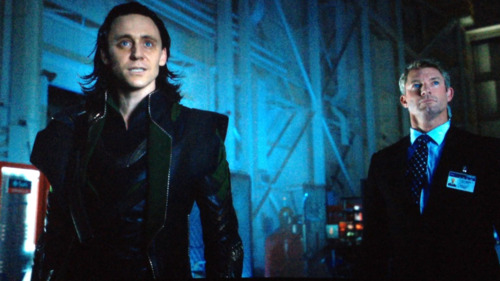
This guy is so obscure that, as far as I know, his only name is “The Blonde Dude”. In case you need a little memory jogging, or haven’t seen the Avengers (in the latter case, go watch it...now), The Blonde Dude appears in the scene where Loki initially gets zapped to earth and steals the tesseract. Loki compromises Selvig and Barton/Hawkeye by touching them over the heart with his spear (cheese!!! Me loves cheese!!!), and then he does the same to a random blonde dude who happens to be standing around...the same blonde dude who’s standing on the far right of the picture above, with bright blue eyes.


This dude is compromised, stands around, walks out with Loki, Barton, and Selvig, and from then on is never heard of again. Even when Fury refers to the incident later in the movie, he says he wonders how  Loki used the spear “to turn two of the brightest men I know into his personal flying monkeys.” (emphasis mine) This also implies that either The Blonde Dude wasn’t all that bright, or else Fury didn’t know him.


Maybe he will return in one of the later movies, but otherwise, he served absolutely no purpose. Perhaps he was a character from the comics whom they decided to give a cameo? I have no idea. But I would really like to know why on earth he was in there, and whether he’s still running around as Loki’s little minion.


So unless you have some cool plans for that nobody character later, or unless he serves some real purpose, you may as well leave him out in the first place. Otherwise you’ll have me knocking on your door and going “Who’s the blonde dude?”

Just remember. Everyone's a hero. Don't play favourites. Treat your story like reality.